Accurate Image to Text Summarizer
Easily convert images to text and summarize them with the power of AI. Process and condense visual content into concise points efficiently.
Vision-Powered Context
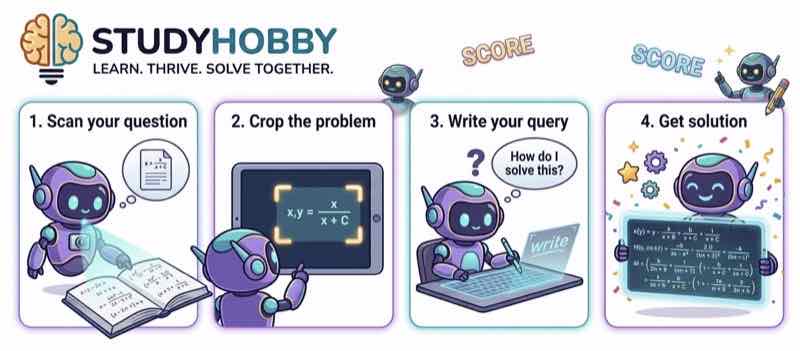
Our advanced vision engine doesn't just read text—it accurately converts images into text summaries. Whether it's a photo summary, a screenshot summary, or a JPEG to summary conversion, we identify headings, sub-points, and the overall semantic structure to capture key insights from any image automatically from raw snapshots. With built-in image crop and summary tools, you get exactly the data you need.
Enterprise Grade Privacy & Security
At StudyHobby, we deeply respect your personal data. The mathematical diagrams, private academic notes, and sensitive document photos you upload are never stored centrally and are absolutely never used to train our AI models. We execute processing through stateless secure API pipelines, discarding your proprietary visual data instantaneously once your answer has been rendered.
Success Stories
"The way it parses my messy anatomy diagrams is actually mind-blowing. Saved my finals week."
"Parsing through archival documents used to take days. Now I just snap a photo and get a summary."
Image Summary FAQ
What kind of images work best?
We support common formats like PNG, JPEG, and WEBP. Our tool is the fastest way to get a <strong>PNG to summary</strong> or <strong>JPEG to summary</strong> result. Clear screenshots, properly lit photos of documents, or highly legible handwriting are parsed flawlessly.
Can it handle specialized crops?
Yes. Use our native <strong>photo crop</strong> feature to select specific sections of a document. Our <strong>image crop and summary</strong> logic ensures the AI focuses only on the visual data you approve.
Can it understand complex charts or tables?
Yes. Our engine uses advanced vision-logical mapping to identify relationship hierarchies in tables, graphs, and structured textbook pages.